A strong brow does not need to look styled to make a difference. It can simply bring balance back to the face, soften the appearance of thinning areas, and make the eyes look more rested. This guide to men’s brow restoration explains the options behind a natural result, what to expect from a professional appointment, and why restraint is often the most important part of the process.
For many men, brow changes happen gradually. Overplucking years ago, scars, genetics, aging, skin conditions, and uneven natural growth can leave one brow thinner or higher than the other. The goal is not to create sharp, overly groomed arches. It is to restore enough density, structure, and symmetry that your brows look like they have always belonged to your face.
What Men’s Brow Restoration Can Address
Men’s brow restoration is a customized approach to improving sparse, uneven, faded, or scarred brows. Depending on your starting point and goals, that may involve professional shaping, tinting, growth support, or cosmetic tattoo techniques such as NanoStrokes, Microfeathering, or soft powder shading.
The right solution depends on what is missing. If your brows are full but unruly, conservative grooming may be all you need. If there are small gaps but plenty of existing hair, subtle tinting or a few strategically placed strokes can create more visual density. If hair loss is more significant, a permanent makeup treatment may provide a soft foundation that looks natural even when no brow hair is present.
A skilled artist does not use a single brow shape for every client. Facial proportions, bone structure, hair color, skin tone, natural hair direction, and the amount of existing brow hair all influence the design. The aim is to make the brow look more complete, not more cosmetic.
The Difference Between Restoration and Over-Definition
A common concern among male clients is walking out with brows that look too dark, too crisp, or too symmetrical. That concern is valid. Brows are naturally sisters, not identical twins, and an overly precise outline can read as artificial on a masculine face.
Natural men’s brow work usually favors a straighter, softer shape with controlled density. Rather than carving a dramatic arch, an artist may reinforce the lower line where it has become patchy, add subtle fullness through the body of the brow, or extend a sparse tail by only a few millimeters. The front of the brow is especially important. It should remain airy and gradually build in density instead of beginning with a hard block of pigment.
The best result is often one that friends cannot identify as a treatment. They may simply notice that you look healthier, more rested, or more put together.
Choosing the Right Brow Restoration Method
There is no single best treatment for every man. Skin type, lifestyle, desired maintenance, and the condition of the natural brow all matter. A detailed consultation should come before any recommendation.
Professional Shaping and Tinting
For clients with good natural density, trimming, conservative cleanup, and tinting can make a surprising difference. Tinting darkens lighter or graying brow hairs and can help fine hairs show up more clearly. It is temporary, making it a good starting point for someone who wants to see a fuller effect without a long-term commitment.
This option will not replace missing hair, and results fade over several weeks. Still, it can be ideal when the main issue is lack of contrast rather than true sparseness.
NanoStrokes and Microfeathering
NanoStrokes use a fine tattoo device to place hair-like pigment strokes into the skin. Microfeathering follows a similarly delicate philosophy, with carefully layered strokes designed to blend with natural hair. These techniques can work beautifully for men with gaps, thin tails, or old scars, particularly when enough existing brow hair remains to create a realistic blend.
Stroke techniques require precision and thoughtful placement. On very oily skin, pigment can heal softer or blur more than expected, which may make a shaded method a better choice. The artist should also consider whether your natural brow hairs grow in a direction that can support the added strokes.
Soft Powder Brows
Powder brows do not have to look like makeup. When applied lightly, they can create the appearance of a naturally denser brow by placing soft, diffused pigment behind existing hair. This approach is often useful for clients with oily skin, broad areas of thinning, or brows that need a subtle foundation rather than individual simulated hairs.
For men, the finish should stay muted and understated. A tailored powder brow is not a harsh outline. It is a soft shadow that gives the brow more presence from a normal conversational distance.
Combination Techniques
Some brows need more than one approach. A few hair-like strokes through the front can preserve a natural texture, while gentle shading through the middle and tail can create stability and depth. This is often an effective option for brows with uneven density, although it is not automatically better than a single technique. The simplest method that achieves the desired result is usually the most natural-looking one.
Why Facial Mapping Matters in Men’s Brow Restoration
Brow restoration should begin before pigment ever touches the skin. Facial mapping uses your natural landmarks, including the bridge of the nose, brow bone, eye placement, and facial balance, to establish a shape that suits you.
This step is not about forcing perfect symmetry. Nearly every face has natural differences from one side to the other. Instead, mapping helps determine where each brow should begin, where fullness is needed, how far the tail should extend, and how much adjustment will look believable.
At Brows by VJ, the consultation and mapping process are designed to keep the result personal. You should have an opportunity to discuss how you normally wear your brows, whether you want anyone to notice the change, and what has not worked for you in the past. Clear expectations protect the natural outcome as much as technical skill does.
What to Expect During a Brow Appointment
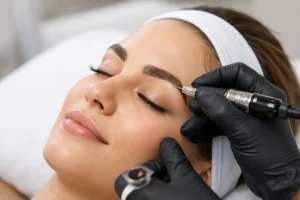
A professional permanent makeup appointment is a measured process, not a rushed cosmetic service. After reviewing your goals and health history, the artist assesses your natural brow pattern and maps the proposed design. You can review the shape before treatment begins and ask for adjustments.
A topical numbing product is typically used to support comfort. Sensation varies, but many clients describe the procedure as manageable, with light scratching or pressure rather than significant pain. Appointment time varies by technique and complexity, though first sessions generally take longer because consultation, mapping, and careful pigment selection are part of the experience.
Pigment is selected to complement your natural brow hair and skin tone. Going too dark at the start is rarely the answer. Fresh pigment may look stronger immediately after the appointment, then soften as the skin heals. Building a believable result is more valuable than chasing instant intensity.
Healing and Touch-Ups: Plan for the Full Process
Permanent makeup is a process with a healing phase, not a one-day finish. In the first few days, brows can appear darker or more defined than the healed result. Mild flaking may follow. As the skin recovers, the color can look lighter or uneven before it settles.
Your artist will provide specific aftercare, but the general principle is simple: keep the area clean, avoid picking or rubbing, and follow restrictions around sweat, swimming, sun exposure, and skincare products near the brow area. Picking at flakes can disturb healing pigment and create patchiness.
A follow-up session is commonly needed to refine areas where pigment healed more softly, adjust density, or make small balancing changes. Healing varies with skin type, immune response, aftercare, medications, and lifestyle. Permanent makeup also fades gradually over time, so occasional color refreshes may be appropriate.
Who Should Pause Before Booking
A consultation is also the place to identify situations that may require waiting. Active acne, eczema, dermatitis, sunburn, open skin, or infection near the brow area should be resolved before treatment. Certain medications, pregnancy or nursing status, bleeding conditions, and recent cosmetic procedures can affect candidacy or timing.
If hair loss is sudden, worsening quickly, or accompanied by scalp or skin changes, it is wise to speak with a medical professional first. Cosmetic restoration can improve the appearance of a sparse brow, but it does not diagnose or treat the underlying cause of hair loss.
How to Find a Natural-Looking Result
Look beyond a single dramatic before-and-after photo. Ask to see healed results on men with a range of skin tones, hair colors, and brow densities. Pay attention to how the strokes or shading blend into real hair, whether the fronts look soft, and whether the shape fits each face rather than repeating the same template.
You should also feel comfortable discussing hygiene practices, pigment choices, aftercare, touch-up expectations, and what can realistically be achieved with your existing brows. A qualified artist will be honest if a lighter, softer approach will serve you better than a dense or highly defined one.
The right brow restoration should feel like a quiet correction, not a new identity. When the design respects your natural features and leaves room for real texture, the mirror reflects a more balanced version of you – and that is usually exactly the point.