A brow can make your eyes look more lifted, your features more balanced, and your whole face more polished – but only when the shape fits you. If you have ever asked, what is the best brow shape for my face, the answer is not a trend, a stencil, or the brow your favorite influencer wears. The right brow is the one that works with your bone structure, natural growth pattern, and the way you want your features to read.
That is why truly great brows are designed, not copied. A soft arch on one person can look elegant and open. On someone else, the same shape can feel too sharp, too flat, or simply out of place. Brow artistry is about creating harmony, not forcing every face into the same template.
What is the best brow shape for my face really based on?
Most people assume face shape is the whole answer. It matters, but it is only one piece of the design. Brow shape should also consider your brow bone, forehead height, eye spacing, lid space, natural density, and facial symmetry.
For example, two people may both have round faces, yet one has strong cheekbones and a pronounced brow bone while the other has softer features and a lower brow line. They will not need the exact same brow. One may suit a defined arch, while the other will look better with a gentler peak and a slightly elongated tail.
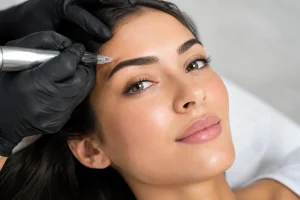
This is where professional brow mapping makes such a difference. Instead of guessing, an artist measures key points of the face to identify where the brow should begin, where the arch should sit, and where the tail should end. The goal is not perfection in a rigid sense. The goal is balance that looks natural when you are speaking, smiling, and seen in real life.
How face shape influences brow design
Face shape gives a helpful starting point because brows can visually soften, lengthen, lift, or structure the face. Still, there is always some flexibility depending on your features and preferences.
Round faces
Round faces usually benefit from brows with some lift. A softly defined arch can add dimension and create a more elongated appearance. If the brow is too rounded, it can make the face appear even fuller. If the arch is too high or severe, it can look surprised rather than polished.
The sweet spot is often a brow with gentle structure and a clean tail. This gives shape without making the face feel hard.
Oval faces
Oval faces are often considered the easiest to balance because the proportions are naturally versatile. A soft angled brow or a gently curved brow usually works beautifully here. The key is not overdoing the arch.
When the brow becomes too dramatic on an oval face, it can throw off a feature set that already has natural balance. A refined, softly sculpted shape tends to keep everything looking effortless.
Square faces
Square faces often have a stronger jawline and broader forehead, so a brow with a soft but noticeable arch can help create contrast and flow. Too flat, and the brow may make the face feel heavier. Too thin, and it may not hold its own against stronger facial structure.
A fuller brow with a controlled arch usually looks especially flattering. It brings softness while still matching the face’s strength.
Heart-shaped faces
Heart-shaped faces are often wider at the forehead and narrower at the chin. A brow that is too angular can overemphasize the upper face. A softer arch usually works better, helping to create a balanced, graceful look.
In many cases, a slightly shorter or more natural tail can also help. It keeps the brow from pulling too much attention outward.
Long faces
Long faces often benefit from a flatter brow shape with only a gentle arch. This can visually create width and reduce the impression of length. A high arch may elongate the face even more, which is usually not the goal.
That said, flat should never mean lifeless. A well-designed flatter brow still needs structure, lift, and a polished finish.
Diamond faces
Diamond face shapes often have strong cheekbones with a narrower forehead and jawline. A curved or softly angled brow can complement this beautifully. The aim is usually to soften the widest part of the face while keeping the eyes lifted and open.
Brows that are too sharp can compete with already prominent angles. A little softness often creates the most elegant result.
Why your natural brow matters just as much
One of the biggest mistakes in brow shaping is trying to create a shape your natural hair pattern cannot support. If your brows naturally grow straighter, forcing a dramatic arch may require too much filling, too much removal, or a permanent makeup design that feels disconnected from your real features.
The best brow shape respects what you already have. Sparse areas can be enhanced. Uneven tails can be corrected. Overplucked brows can be rebuilt. But the most believable results happen when the design works with your natural direction, density, and texture.
This is especially important with services like Microblading, NanoStrokes, Microfeathering, or Ombré Powder Brows. A beautiful healed result depends on choosing a shape that will still feel balanced once the skin settles and the pigment softens. Natural-looking brows are rarely the most extreme brows.
What is the best brow shape for my face if my brows are uneven?
Uneven brows are incredibly common. In fact, they are more common than naturally symmetrical brows. One brow may sit higher, grow fuller, or have a different tail angle. Sometimes this is from over-tweezing. Sometimes it is simply facial muscle movement and anatomy.
The goal is usually not to make both brows identical. It is to make them look like they belong together. Good brow design accounts for the way your face moves and rests. An experienced artist will balance shape and fullness while avoiding an overworked look.
This is also why DIY shaping can be frustrating. When you chase symmetry with tweezers, it is easy to keep removing hair until both brows are thinner than you wanted. Strategic shaping is always better than aggressive correcting.
The brow details people overlook
Arch placement gets a lot of attention, but other details have just as much impact.
Brow thickness changes how youthful and natural the face appears. Going too thin can age the features or make sparse areas more noticeable. Going too thick can overpower delicate facial features. The right thickness is proportional, not trendy.
The front of the brow matters too. A harsh boxy front can look heavy, especially in daylight. A softer gradient at the start of the brow tends to look more polished and realistic.
Then there is tail length. A tail that ends too early can make the brow look unfinished. A tail that extends too far can pull the eyes downward. Small adjustments here can completely change the overall effect.
When to follow the rules and when not to
Face shape guidelines are useful, but they are not strict rules. Sometimes the “technically correct” shape is not the most flattering one for your style, age, or daily routine.
If you prefer a cleaner, more defined makeup look, you may want a stronger brow than your face shape chart suggests. If you want a softer, low-maintenance appearance, a gentler shape may serve you better. Men often want restored fullness and cleaner structure without looking overly shaped, which calls for a different design approach than a bold makeup-inspired brow.
That is why consultation matters. The right brow should reflect not only your features, but also how you want to feel when you look in the mirror. Refreshed. More balanced. More confident. Still like yourself.
How professionals choose the most flattering shape
At a high level, the process is part measurement and part artistry. Brow mapping establishes your ideal framework based on facial proportions. Then the design is adjusted for natural growth, muscle movement, and personal preference.
A skilled brow artist will also think beyond the appointment itself. How will the brow heal? Will this shape still look soft and elevated without daily makeup? Does the design fit your lifestyle, skin type, and long-term maintenance preferences?
That is what separates a customized brow service from a one-size-fits-all result. At Brows by VJ, this personalized approach is central to creating brows that feel refined, natural, and tailored to the individual rather than the trend.
Signs you have found the right brow shape
The best brow shape does not announce itself first. Instead, your whole face looks more balanced. Your eyes appear brighter. Your features look lifted. Makeup becomes easier, or less necessary. Most importantly, the brow does not distract from your face. It supports it.
If you are constantly drawing, trimming, or correcting your brows to make them work, the shape may not truly be right for you. A well-designed brow should reduce effort, not create more of it.
The best answer to what is the best brow shape for my face is this: the one that fits your face naturally, enhances your features subtly, and still looks like you on your best day. When brow shape is approached with precision and care, it does more than frame the face. It gives you that polished, put-together feeling that lasts long after you leave the mirror.