A beautiful brow result should never look copied from someone else’s face. The custom brow design process begins long before pigment is placed or a single hair stroke is created. It starts with studying your natural brow pattern, bone structure, skin, coloring, lifestyle, and the way you want to feel when you look in the mirror without makeup.
For many clients, the goal is not a dramatic change. It is waking up with brows that look balanced, polished, and believable. For others, it is restoring shape after hair loss, correcting asymmetry, softening an overly harsh previous brow treatment, or creating subtle definition that saves time every morning. A thoughtful design makes room for all of those goals while keeping the final result distinctly yours.
Why Brow Design Is More Than Choosing a Shape
Brows frame the eyes, but they also influence how the entire face reads. A brow that sits too high can make an expression look surprised. One that is too dark or too sharply squared can feel heavy. A shape that looks flattering in a filtered photo may not suit your facial movement, skin texture, or natural hair growth.
That is why a premium brow appointment should not begin with a stencil. It should begin with a conversation. Your artist needs to understand what you currently fill in, what you dislike about your brows, how much daily makeup you wear, and whether you prefer a soft, airy finish or more consistent definition. Even the best technique can look wrong when it is chosen without listening to the person wearing it.
At Brows by VJ, the design is approached as facial artistry with a technical foundation. The aim is to enhance what already belongs on your face, not replace it with a trend that may feel dated or unfamiliar in a year.
The Custom Brow Design Process, Step by Step
The consultation sets the direction
The first stage is a detailed consultation. This is where your brow history matters. Your artist may ask about previous microblading or permanent makeup, medications, skin treatments, allergies, pregnancy or nursing status, and any conditions that could affect healing or pigment retention.
You will also discuss your expectations honestly. Reference photos can be helpful for communicating the softness, density, or overall style you like, but they are inspiration rather than a blueprint. Your face, existing brow hair, and skin will determine what is appropriate and achievable.
This conversation is also the time to identify what you do not want. Perhaps you have had brows that healed too warm, too dark, or too bold. Maybe you want to avoid a blocky front, a high arch, or an overly made-up finish. Clear preferences give your artist a stronger starting point and help prevent a result that feels unlike you.
Facial mapping creates balance, not artificial symmetry
No human face is perfectly symmetrical. One eyebrow may naturally sit a little higher, one eye may be slightly more open, and facial muscles can lift differently from side to side. A skilled artist does not force identical brows onto an asymmetrical face. Instead, facial mapping is used to create visual balance while respecting your natural features.
Using measured reference points around the nose, eyes, brow bone, and facial center, the artist outlines where each brow should begin, arch, and taper. The proposed shape is drawn on before the service begins, giving you the opportunity to view it sitting up and share feedback.
This is an essential part of the experience. Small adjustments to the start of the brow, arch placement, thickness, or tail length can change the overall effect. A client with a strong natural brow may need only strategic refinement. Someone with sparse brows may benefit from a fuller outline, but still one that preserves softness and proportion.
Your natural hair pattern guides the design
The most natural results work with the hair you have whenever possible. Your artist evaluates the direction, density, texture, and color of your brow hair. This helps determine whether a NanoStrokes or Microfeathering approach can blend convincingly with existing hair, or whether a soft Ombré Powder Brow may provide a more even, makeup-like foundation.
Technique selection is not simply a matter of preference. Skin type matters. Very oily skin, mature skin, heavily textured skin, or skin with enlarged pores may not retain crisp hair strokes as predictably as other skin types. In those cases, a shaded technique or a combination approach may heal more consistently and look softer over time.
For men’s brow services, the same principle applies with a different visual goal. The design generally prioritizes subtle restoration, natural density, and a masculine shape rather than a highly sculpted or cosmetic appearance. The right treatment should look like healthy brows, not obvious brow makeup.
Pigment selection is tailored to your coloring and skin
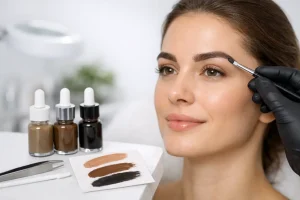
Choosing pigment is a careful process, not a quick match to the hair on your head. Brow hair often contains multiple tones, and skin undertones can influence how pigment heals. A shade that appears perfect when freshly applied may heal differently once the skin has recovered.
Your artist considers your natural brow color, hair color, complexion, undertone, and desired level of definition. The goal is typically a healed result that complements your features rather than competing with them. This may mean choosing a softer shade than you expected, especially for first-time clients who are concerned about brows looking too dark.
Fresh permanent makeup commonly appears stronger immediately after the appointment. Healing can involve temporary darkening, light flaking, and a lighter-looking phase before color settles. Knowing this in advance helps clients avoid judging the outcome too early or trying to “fix” the brows at home.
Comfort, Precision, and Realistic Expectations
A well-designed treatment plan includes more than shape and color. It also considers comfort and aftercare. A topical numbing product may be used throughout the procedure, and your artist should explain what you are likely to feel. Most clients describe the sensation as manageable, though individual sensitivity varies.
The procedure itself is intentionally unhurried. Building fine strokes, soft shading, or a natural gradient requires control. Rushing can compromise detail, and detail is what keeps permanent makeup from looking flat or overly saturated.
It is equally important to understand that permanent makeup is a process. A perfect healed result often requires a touch-up appointment after the initial treatment. During that visit, your artist can assess retention, refine areas that healed lighter, and make carefully considered adjustments. Skin healing, aftercare, lifestyle, and individual biology all influence how pigment settles.
The healthiest expectation is enhancement, not perfection. Brows can be balanced and beautifully refined while still moving naturally with your face. They can reduce the need for daily pencil or powder without eliminating every small variation between the two sides.
How to Prepare for Your Brow Appointment
Preparation supports both the quality of the service and your comfort. Follow the specific pre-care instructions provided by your artist, especially if you use retinol, exfoliating acids, acne medication, or have recently received facial treatments. These can affect skin sensitivity and may require a pause before your appointment.
Avoid scheduling brow permanent makeup too close to major events when possible. Initial healing is visible, and your brows will need time to settle into their true color and softness. Plan for a period when you can follow aftercare carefully, including avoiding picking, excess sweat, sun exposure, swimming, and products your artist advises against during healing.
If you have prior permanent makeup, disclose it before booking. Correction work requires a different level of assessment. In some cases, old pigment may need to fade further or be removed before a fresh design can be created safely and beautifully.
The Result Should Feel Like You, Only More Refined
The best brow work often earns the quietest compliments: “You look refreshed,” “Your eyes stand out,” or “What did you do differently?” That is the power of individualized design. The brow is present, polished, and flattering, but it does not announce itself before the rest of your face does.
A custom brow design is an investment in daily confidence, and it deserves an artist who treats your face with patience and respect. When shape, technique, pigment, and healing expectations are thoughtfully aligned, the result is not just a brow transformation. It is the ease of recognizing yourself, with a little more balance every day.