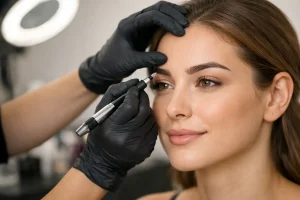
A brow can look beautifully shaped on its own and still feel slightly off when you look at the full face. That is why the question of how eyebrow mapping improves symmetry matters before any permanent makeup, microblading, NanoStrokes, or powder brow appointment. Mapping turns brow design into a measured, face-specific process, helping create balance without forcing your features into an unnatural template.
At Brows by VJ, brow mapping is not a rushed outline drawn moments before a service. It is the foundation of a personalized design – one that considers your bone structure, natural brow growth, facial proportions, and the amount of definition that feels like you.
How Eyebrow Mapping Improves Symmetry
Eyebrow mapping uses carefully placed reference points to establish where each brow should begin, arch, and end. These points create a visual framework for balanced placement and proportion. Rather than guessing where an arch should sit or trying to make brows match freehand, an artist can see how the design relates to your eyes, nose, forehead, and overall facial structure.
The goal is not to make both brows look stamped-on identical. Faces are naturally asymmetrical. One eye may sit slightly higher, one brow bone may be more prominent, or the muscles on one side of the forehead may lift differently when you speak or smile. A skilled artist works with those details, not against them.
Mapping helps determine the most flattering brow start, where the arch gives the face lift without appearing surprised, and how far the tail can extend without pulling the eye downward. When these decisions are based on facial landmarks instead of trends, the result looks softer and more believable.
It creates balance from the center outward
The inner brow area has a major effect on facial harmony. Brows that begin too close together can make the face feel crowded, while brows that begin too far apart can make the nose appear wider or leave the eyes looking disconnected. Mapping establishes an appropriate starting point for each brow, then builds the shape outward in a balanced way.
The arch is equally influential. A high, sharp arch may suit some features, but it can look harsh on others. A lower, gently rounded arch can provide a polished look while preserving a relaxed expression. Mapping gives the artist a reliable way to compare both sides and refine the design before pigment is ever placed.
It accounts for your natural brow pattern
Natural hair direction matters. Even clients with sparse brows usually have a growth pattern that offers valuable guidance. Mapping lets the artist identify where to preserve existing fullness, where a shape needs subtle support, and where added strokes or shading would look most natural.
For someone choosing NanoStrokes or Microfeathering, this may mean placing realistic hairlike strokes where the brow has gaps while following the proper flow of existing hair. For Ombré Powder Brows, it may mean adjusting the density of shading so the brow has definition without looking too dark or blocky. The mapped design guides the technique, but the technique should always serve the face.
Symmetry Is About Harmony, Not Matching Copies
The phrase “brows are sisters, not twins” is familiar for a reason. Perfectly identical brows are rarely realistic, especially when the face itself has natural differences. The better goal is visual symmetry: brows that appear balanced when you are looking forward, talking, smiling, and moving through daily life.
A thoughtful mapping process may intentionally make small adjustments from one side to the other. If one brow naturally sits higher, lowering it dramatically may not be possible or flattering. Instead, the artist may use a slightly different arch placement, thickness, or tail angle to create a more even overall impression.
This is where experience matters. Overcorrecting can make brows look overly sculpted, disconnected from natural facial movement, or too heavy for delicate features. Under-correcting can leave the original imbalance more noticeable after the procedure. The best design lands between those extremes: refined, balanced, and still recognizably yours.
What Happens During a Brow Mapping Appointment
Brow mapping typically begins after a consultation about your goals. Some clients want a fuller everyday brow because they are tired of filling in sparse areas. Others want to restore shape after over-tweezing, soften uneven arches, or create a subtle masculine brow that looks well groomed without appearing overly defined.
Your artist studies the face at rest and in motion. They consider your current brow hair, skin type, desired maintenance level, and the permanent makeup technique being considered. A client with oily skin, for example, may be better suited to a powder brow effect than fine hairstrokes alone, while a client with dry to normal skin and existing brow hair may be a strong candidate for NanoStrokes or Microfeathering.
Next, the artist marks the proposed beginning, arch, and tail of each brow. Measurements help compare height, length, and spacing, but the design is also assessed visually. You should have an opportunity to look at the outline, share your preferences, and ask questions before the service begins.
This step is especially reassuring for first-time permanent makeup clients. You are not expected to simply trust a shape that has not been discussed. A premium brow experience should include clear communication about what is being designed, why it suits your features, and how it will heal.
Why Mapping Makes Permanent Makeup Look More Natural
Permanent makeup is long-lasting, so placement has more weight than it would with a brow pencil. A brow that is too high, too long, too dark, or too close to the center of the face can be difficult to ignore. Mapping reduces that risk by giving the artist a clear plan before the procedure starts.
It also prevents a common concern: brows that look fine immediately after the appointment but feel unbalanced once swelling settles or color heals. While healing changes the intensity of pigment, it should not change the underlying structure of a well-mapped design. Starting with a precise shape supports a more predictable result.
Natural-looking brows also depend on restraint. More pigment is not always better. If your face is soft and low contrast, an overly bold brow may overpower your features. If you have strong bone structure or very sparse brows, a little more definition may create the balance you have been missing. Mapping helps establish the appropriate shape first, so color and density can be tailored thoughtfully.
Mapping for Different Brow Goals
The same framework can support very different outcomes. A client who wants a barely-there enhancement may use mapping to preserve a soft, feathered shape and correct only the areas that look uneven. Someone who has little to no brow hair may need a more complete blueprint for restoring structure and proportion.
Men’s brow services benefit from mapping as well. The aim is usually not a crisp, makeup-like arch. Instead, mapping can restore fullness, improve uneven growth, and maintain a straighter, more natural brow profile that suits the client’s features.
Age can also influence brow design. As skin and facial volume change, a brow shape that worked years ago may no longer feel flattering. A carefully placed arch and tail can create a refreshed appearance, while an overly thin or overly lifted brow may draw attention to concerns a client would rather soften.
Questions to Ask Before Your Brow Service
Before committing to permanent makeup, ask how your brow shape will be mapped and whether you will approve the design before pigment is placed. It is also helpful to ask which technique best fits your skin type, natural hair, lifestyle, and desired level of definition.
Bring reference photos if they help communicate your preferences, but stay open to expert guidance. A brow style that looks beautiful on another face may not create the same result on yours. The most flattering brows are designed around your individual features, not copied from a trend.
A detailed mapping session gives you something more valuable than a perfectly drawn outline: confidence that your brow design was created with your face, your comfort, and your long-term result in mind. When your brows feel balanced, the rest of your features have room to shine.