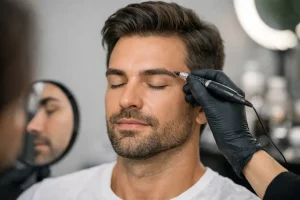
A fuller brow can change the balance of your entire face, but the right permanent makeup technique should still look like you. When comparing microfeathering vs powder brows, the real question is not which service is better. It is which finish, skin type, lifestyle, and brow goal will create the most natural and confidence-building result for you.
Both treatments are customized forms of cosmetic tattooing designed to bring shape, definition, and consistency to the brows. The difference is in the visual effect: microfeathering creates the appearance of delicate individual hairs, while powder brows build a soft, makeup-inspired haze of color. A detailed consultation and facial mapping process make the decision much clearer than a single before-and-after photo ever could.
What Is Microfeathering?
Microfeathering is a brow-enhancement technique that creates fine, hair-like strokes through areas of sparseness or uneven growth. The goal is to blend these strokes with your existing hair pattern, giving the brow a realistic, airy texture rather than a filled-in makeup look.
It is especially appealing to clients who want others to notice that their brows look naturally fuller, not that they have had a brow procedure. The artist considers your natural direction of growth, brow density, facial symmetry, skin tone, and preferred level of definition before placing each stroke. This is why a tailored design matters. A stroke pattern that looks beautiful on one person may look out of place on another.
For many clients, microfeathering is ideal when the brow already has some hair but needs strategic support. Perhaps the tails have thinned, an old over-tweezing pattern never fully grew back, or one brow has a noticeable gap. Rather than creating a solid field of pigment, microfeathering can restore visual balance while preserving a soft, believable result.
The Microfeathering Finish
Healed microfeathering tends to look subtle and dimensional. Up close, it imitates fine brow hairs; at a normal conversational distance, it creates a more complete brow shape. It is a beautiful option for clients who rarely wear bold brow makeup and want to simplify their morning routine without changing their overall look.
That natural finish also has a trade-off. Hair-like strokes need the right canvas to remain crisp. Very oily skin, heavily textured skin, or skin with enlarged pores through the brow area may cause strokes to soften or blur more quickly during healing. This does not mean a natural-looking result is off the table. It means the technique may need to be adjusted, or a soft shading approach may offer more reliable long-term definition.
What Are Powder Brows?
Powder brows use layers of tiny pigment pixels to create a soft, shaded effect. Despite the name, they are not meant to look heavy or blocky. When designed with skill, healed powder brows can resemble the gentle definition of brow pencil or powder, often with a lighter, more diffused front and a slightly deeper tail.
This technique is sometimes called ombré powder brows because of that gradual transition of color. The result can range from barely there to polished and makeup-ready, depending on the client’s preferences, natural brow shape, and skin characteristics. The best powder brow design does not force a trendy template onto the face. It is mapped to complement your bone structure, features, and everyday style.
Powder brows are often a strong choice for clients who fill in their brows daily, have little natural brow hair, or want a more consistently defined appearance. They can also be more forgiving on oily or mature skin, where fine hair strokes may not heal as predictably.
The Powder Brow Finish
A well-healed powder brow should not look like a flat, solid tattoo. It should have softness, dimension, and intentional color placement. For a client who enjoys a polished brow but does not want the daily effort of makeup, that gentle shading can feel like a major time-saver.
The main consideration is personal preference. If you want every part of the brow to look like individual hairs, powder brows may feel more cosmetic than you envisioned. If you already love the look of tinted, shaped brows after applying your makeup, the finish may feel familiar and flattering from the start.
Microfeathering vs Powder Brows: The Key Differences
The most visible difference is texture. Microfeathering relies on hair-like detail, while powder brows use soft shading to create density. Microfeathering can be wonderfully understated on the right skin type and with enough existing brow hair to blend the strokes. Powder brows generally create more visual fullness, especially in photographs, after workouts, and on makeup-free days.
Longevity can differ as well. Both services require a perfection session after the initial appointment and periodic color refreshes over time. However, oil production, sun exposure, skincare ingredients, immune response, and lifestyle all influence pigment retention. Because powder brows distribute pigment in a shaded pattern, they may hold their overall shape and visibility more consistently for some oily-skinned clients. Fine strokes can require more maintenance when skin produces significant oil or has a lot of texture.
Healing also looks different. Immediately after either treatment, the brows will appear darker and more defined than the healed result. As the area heals, some flaking and temporary lightening are expected. With microfeathering, the strokes may seem to fade significantly before color settles back into the skin. With powder brows, the shading can look deeper at first, then soften considerably as healing progresses.
Neither result should be judged in the first week. Your skin needs time to recover and reveal the true healed color. The touch-up appointment is where the artist evaluates retention, refines small areas, and adjusts depth or density when appropriate.
Which Brow Service Is Right for Your Skin and Style?
Choose microfeathering if you want a soft, hair-like enhancement, have normal to dry skin through the brow area, and prefer a minimal-makeup appearance. It can be an excellent fit if you have some natural brow hair and want to correct gaps, asymmetry, or thinning without creating a visibly shaded brow.
Powder brows may be the better choice if you have oily skin, very sparse brows, or a preference for a more polished finish. They are also worth considering if you routinely use brow pencil, pomade, or powder and want that tidy definition to remain in place through busy mornings, gym sessions, humidity, and travel.
There is also a middle ground. Some clients benefit from a combination approach that pairs hair-like detail near the front of the brow with soft shading through the body and tail. This can create a natural front while delivering the fullness and longevity that a few strokes alone may not provide. The appropriate approach depends on your skin, your desired healed look, and how much existing hair is available to work with.
Why Your Consultation Matters More Than the Trend
A brow service is not simply a color choice. It is a facial design decision with lasting results. Before booking, be honest about how you wear your brows now. Bring photos that show what you like, but also explain what you do not like. A skilled artist can identify whether your inspiration photo suits your own bone structure, hair pattern, and skin type.
Your consultation should also include a conversation about medical history, current skincare, past brow tattooing, and healing expectations. Retinol, exfoliating acids, certain medications, recent sun exposure, and previous pigment can all affect timing and results. If you have older brow work, correction or removal may be needed before a fresh shape can be created safely and beautifully.
At Brows by VJ, brow artistry begins with detailed mapping and a conversation about the version of yourself you want to see in the mirror. The goal is never to make every client look the same. It is to create brows that feel balanced, comfortable, and authentically yours.
Preparing for a Beautiful Healed Result
Your aftercare is part of the treatment, not an afterthought. Follow your artist’s instructions closely, avoid picking or scratching during the flaking stage, and protect the area from excess moisture, sweat, sun, and skincare products as directed. Skipping these steps can affect pigment retention and cause uneven healing.
Plan your appointment around important events when possible. Although many clients are comfortable being out and about shortly after treatment, the initial color will be stronger and the healing period requires patience. Give yourself room to let the process unfold rather than expecting the final result overnight.
The most flattering brow is not necessarily the boldest or the most detailed. It is the one that supports your features, fits your real routine, and still feels like you when you catch your reflection on an ordinary Tuesday morning.