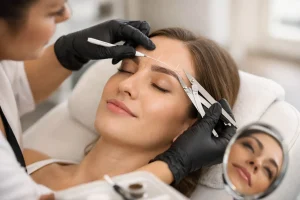
A beautiful permanent brow should not announce itself before you enter the room. It should bring balance to your face, restore definition where hair is sparse, and make getting ready feel easier. That is why brow pigment selection is never as simple as choosing light, medium, or dark brown from a chart. The right shade is a carefully considered blend of your skin, natural brow hair, undertone, lifestyle, and the way pigment will soften as it heals.
At Brows by VJ, pigment is selected to support natural-looking results, not to create a stamped-on brow. A thoughtful color plan is one of the details that separates a polished, face-specific enhancement from a result that feels too warm, too cool, or too bold.
Why Brow Pigment Selection Matters So Much
Permanent makeup pigment does not sit on the surface like pencil, powder, or tinted brow gel. It is implanted into the skin, then goes through a healing process that changes its initial appearance. Fresh brows can look deeper and more defined than the final healed result. As the skin heals and the pigment settles, the color typically softens.
This is why selecting a pigment solely because it looks perfect in the bottle can lead to disappointment. A shade that appears rich and neutral before application may heal warmer on one client and cooler on another. Skin tone, natural oils, prior brow tattooing, sun exposure, and even skincare habits can affect the final result.
The goal is not necessarily to match every strand of brow hair exactly. The goal is to create a healed tone that looks believable against your complexion and complements your natural hair. For some clients, that means a soft taupe. For others, it may mean a warm medium brown, a deeper neutral espresso, or a customized blend that prevents the brow from reading gray or reddish over time.
The Details Behind the Right Brow Color
Your skin undertone is part of the formula
Surface skin tone is what you see first: fair, medium, tan, deep, or somewhere in between. Undertone is the subtle cast beneath it. It may lean warm, cool, neutral, olive, golden, or rich and deep. Two clients with a similar visible complexion can need very different pigment plans because their undertones behave differently.
Warm undertones can sometimes pull cool or ashy pigments in an unexpectedly muted direction. Cool undertones may make a pigment with too much warmth appear more red or orange than intended. Olive skin often requires especially thoughtful balancing, since it can heal color differently than expected from a standard swatch alone.
An experienced brow artist studies the full picture rather than relying on a single rule. Facial mapping, natural brow hair, complexion, and desired finish all inform the recommendation. The color should belong on your face, not compete with it.
Natural brow hair provides a useful reference
Your natural brow hair gives valuable direction, even if it is sparse, patchy, graying, or light. The artist looks at its depth and tone, along with the hair color at your roots. A client with dark brunette hair may not need black brows. In fact, pure black pigment is rarely the answer for a natural cosmetic brow because it can heal overly cool or harsh.
Likewise, blonde clients do not automatically need a pale beige brow. If the pigment is too light, the healed result may offer little visible structure. A soft, slightly deeper taupe can often create the definition that light brows are missing while still looking delicate and natural.
For men’s brow services, pigment selection is just as intentional. The preferred result is typically subtle restoration, with an airy pattern and a shade that supports the existing brow without looking filled in. A masculine brow should retain texture and character.
Skin type affects pigment retention
Skin type is not a footnote in brow pigment selection. It can shape both technique and color planning. Dry or balanced skin often retains crisp detail well, which may make it an excellent candidate for NanoStrokes or Microfeathering. Oily skin can diffuse pigment more during healing, and a softly shaded powder brow approach may provide more consistent long-term definition.
This does not mean oily skin cannot receive hair strokes, or that dry skin always needs them. It means the treatment plan should be realistic about retention and longevity. Using a pigment that is too light on highly oily skin, for example, may produce a result that fades more quickly than the client expects.
Mature skin also deserves a tailored approach. Skin texture, thinness, and elasticity may influence the choice between delicate strokes, shading, or a combination style. The most flattering treatment is not always the trendiest option. It is the one that works with your skin and allows the color to heal gracefully.
Fresh Color Is Not Healed Color
One of the most reassuring parts of a permanent makeup consultation is understanding what happens after the appointment. Fresh brows usually appear darker, sharper, and more intense at first. During the healing period, they may seem to fade significantly before the color settles back into the skin.
This process can feel emotional, especially for first-time clients. Brows frame the face, and even a small change can feel dramatic when you are not used to seeing it. A professional artist prepares you for each stage, provides aftercare guidance, and schedules a perfecting session when appropriate.
The touch-up is not a sign that something went wrong. It is an expected opportunity to assess how your individual skin retained pigment, refine small areas, and adjust depth if needed. Permanent makeup is customized in layers. The first appointment creates the foundation; the healed assessment helps complete the result.
Previous Brow Tattooing Changes the Conversation
If you have old microblading, faded powder brows, or a previous tattoo that has turned gray, red, blue, or orange, do not choose a new pigment based on your current hair color alone. Existing pigment becomes part of the canvas.
Color correction may be needed before a new brow design can be safely layered over the old work. In some cases, removal or lightening is the better path. Trying to cover a heavily saturated or discolored tattoo with a darker shade can create more complexity, not a cleaner result.
A transparent consultation matters here. A skilled artist should explain what can realistically be corrected, whether multiple sessions may be needed, and when a desired shape or color is not achievable immediately. Honest guidance protects both the integrity of your skin and the quality of the final brow.
How to Prepare for a Color Consultation
You do not need to arrive knowing the exact pigment name you want. In fact, bringing a screenshot of a celebrity brow or a filtered makeup photo can be less helpful than discussing the effect you want: softer, fuller, more even, more youthful, or easier to maintain.
Come prepared to share your brow history, including prior permanent makeup, tinting, and any skin treatments around the brow area. Mention if you use retinoids, exfoliating acids, or strong active skincare products, because these can affect preparation and healing. It also helps to describe how you normally wear makeup. Someone who loves a polished brow every day may prefer more definition than someone who rarely wears makeup.
Your artist can then guide the conversation from preference to possibility. You may leave with a recommendation for Ombré Powder Brows, NanoStrokes, Microfeathering, or another tailored approach, along with a pigment strategy designed for your skin rather than a one-size-fits-all shade chart.
Choosing Natural Over Trend-Driven
Brow trends change quickly. Ultra-dark arches, highly contrasted fronts, and warm caramel tones may look striking in a photo, but permanent makeup should be chosen with more care than a temporary makeup look. The most enduring result is usually one that stays close to your natural coloring and facial structure.
That does not mean your brows must be invisible. It means definition should feel intentional. A slightly deeper healed shade may be appropriate when you want more presence, while a softer blend may be best when your priority is an effortless, barely-there finish. Both can be beautiful when the pigment choice supports your features.
The best brow color is not the darkest shade, the coolest shade, or the shade someone else chose. It is the one that heals into a balanced, believable frame for your face and lets you feel like yourself on your best day.