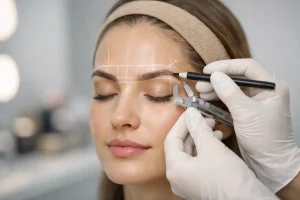
A brow can be technically beautiful and still feel wrong if it does not belong to the face wearing it. That is why facial mapping for eyebrows happens before pigment, strokes, or shading. It is the design step that turns a brow appointment from a guess into a personalized plan – one built around your bone structure, natural hair growth, facial proportions, and the way you want to feel when you look in the mirror.
For permanent makeup and advanced brow artistry, mapping is not a quick set of marks drawn above the eyes. It is a detailed assessment of where the brows should begin, lift, and taper so they frame your features without looking overly dramatic, too heavy, or artificially identical.
What Facial Mapping for Eyebrows Actually Does
Facial mapping for eyebrows uses reference points on the face to establish a brow shape that is balanced for you. Your artist evaluates the relationship between your eyes, nose, forehead, cheekbones, brow bone, and natural brow hairs. From there, the design is drawn directly on the skin for you to review before the service begins.
The goal is not to force every face into the same high arch or long, bold tail. A soft rounded brow may complement one client beautifully, while a more structured arch gives another client the definition they have been missing. Mapping provides a thoughtful starting point, then artistry refines it.
For clients considering NanoStrokes, Microfeathering, microblading, or Ombré Powder Brows, this planning stage is especially valuable. These services are designed to last, so a shape should support your everyday look, not a passing trend.
The Three Points That Build a Brow Shape
Most brow mapping begins with three foundational points: the front of the brow, the arch, and the tail. These points create the overall framework, but they are never selected in isolation.
The brow start
The beginning of the brow influences how open, close-set, soft, or strong the eyes appear. If it starts too far inward, the brows can look crowded and overly severe. If it starts too far outward, the center of the face may lose definition. Your artist considers the width of the nose, the inner eye area, and your existing hair pattern to find a start point that feels balanced.
The arch
The arch is where brow mapping becomes highly individual. A well-placed arch can create lift and structure, but an arch placed too high can look surprised or disconnected from your natural features. A low arch may be the better choice for a softer, more youthful effect, particularly when it follows the client’s natural brow bone.
The right amount of lift depends on your facial structure, eyelid space, and personal style. Someone who wears polished makeup daily may prefer more definition than someone who wants a barely-there result. Both can look natural when the shape is intentional.
The tail
The tail gives the brow its finish. It should taper gracefully and support the eye shape without dragging the face downward. A tail that is too long, too low, or too thick can make the entire brow feel heavy. During mapping, the tail is adjusted to preserve lift while keeping the result believable from every angle.
Symmetry Matters, but Identical Brows Are Not the Goal
Brows are sisters, not twins. One side of the face may sit slightly higher, one eye may open differently, or one natural brow may have more hair than the other. These differences are normal, and a skilled artist does not ignore them just to create a ruler-straight design.
Instead, mapping works toward visual balance. The artist measures and checks proportions from the front, then reassesses how the shape reads when you smile, speak, and relax your forehead. This helps avoid a design that looks balanced only when your expression is perfectly still.
There is a trade-off here. Chasing exact symmetry can require placing one brow too high or too low compared with its natural position. A more flattering approach often respects the face’s existing movement and creates harmony rather than mathematical sameness.
Why Your Natural Brow Hair Still Matters
Even when brows are sparse, patchy, overplucked, or affected by hair loss, the remaining hairs tell an important story. Their direction, density, color, and placement help guide the final design. A mapped brow that works with your natural pattern tends to heal more softly and look more convincing over time.
This is particularly relevant for NanoStrokes and Microfeathering. These techniques are intended to mimic the look of real hairs, so the stroke direction should flow naturally with the brow rather than compete with it. For clients who prefer Ombré Powder Brows, natural hair still informs how soft the front should be and how much density the body and tail can carry.
Men’s brow services also benefit from careful mapping. The goal is usually restoration, not an overly groomed or sharply sculpted appearance. A slightly straighter shape, softer edges, and a restrained arch can create a fuller, cleaner look while preserving a masculine brow character.
Mapping Before Permanent Makeup Builds Confidence
For many first-time permanent makeup clients, the biggest concern is simple: What if I do not like the shape? The mapping process is where that concern gets addressed with clarity and care.
Before pigment is placed, you can see the proposed design, ask questions, and share what feels right or what you would like adjusted. Perhaps you want a more delicate front, less of an arch, a shorter tail, or a fuller look through a sparse area. Those preferences matter, and they should be part of the design conversation.
A professional consultation also includes a realistic discussion of what permanent makeup can and cannot change. Mapping can improve balance and create stronger definition, but it cannot erase every natural asymmetry or guarantee a filter-perfect result. The most beautiful outcomes are often the ones that look like an elevated version of your own brows.
Your Skin Type and Lifestyle Can Influence the Design
A brow shape is only one part of a lasting result. Skin type, skincare routine, sun exposure, and desired maintenance level also affect which technique and level of definition make sense.
Oily skin, for example, may retain crisp hair-like strokes differently than dry or balanced skin. In some cases, a soft shaded technique such as Ombré Powder Brows may offer more predictable long-term definition. Mature skin may benefit from a design with soft transitions and thoughtful placement that does not emphasize texture. Sensitive skin, active acne near the brow area, or certain medical conditions may require rescheduling or additional consultation.
Your lifestyle matters, too. If you exercise frequently, spend time outdoors, or want to reduce your daily makeup routine, you may prefer a design that looks polished without needing pencil or powder. If you love changing your brow look from season to season, a softer, more conservative mapped shape leaves room for makeup flexibility.
What to Expect During a Brow Mapping Appointment
The experience should feel collaborative, not rushed. Your artist begins by learning about your brow history, makeup habits, preferred level of definition, and any concerns from previous brow services. Photos of looks you like can be useful, but they are a reference rather than a template. A brow shape that flatters someone else may not suit your proportions or natural growth pattern.
Next, the artist assesses your face at rest and in motion, then creates a preliminary outline. Measurements help establish balance, while trained visual judgment ensures the shape does not become too rigid. You will review the mapping before the procedure moves forward.
Once the design is approved, the selected technique is tailored to the plan. The shape remains central whether the finished effect is delicate hairstrokes, airy feathering, a soft powder finish, or a combination of texture and shading. Healing can soften the initial color and definition, which is why the design is built with both the immediate appearance and healed result in mind.
A Better Brow Starts With a Better Plan
The most convincing brows rarely announce themselves. They make the eyes look more open, the face feel more balanced, and the morning routine a little easier. Thoughtful facial mapping is what makes that subtle transformation possible.
At Brows by VJ, the best brow design is never borrowed from a stencil. It is shaped around the person in the chair, with room for their features, preferences, comfort, and natural beauty to lead the way.