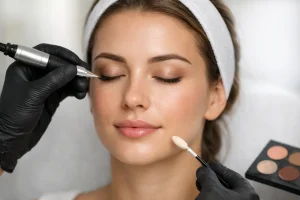
If your forehead gets shiny by midday and brow pencil seems to disappear before dinner, you are right to ask more questions before booking. Permanent makeup for oily skin can produce soft, polished, natural-looking results, but skin type should influence everything from the technique selected to the way healing is managed. The goal is never to force a trendy brow style onto your skin. It is to create definition that heals beautifully and suits the way your skin behaves.
Why Oily Skin Changes Permanent Makeup Results
Sebum is the natural oil produced by your skin. It protects the skin barrier, but it can make pigment retention less predictable, particularly in the brow area. When the skin produces more oil, crisp hairstroke patterns may soften faster during healing and over time. Pigment can also appear lighter or less sharp once the skin settles.
That does not mean oily skin is a poor candidate for permanent makeup. It means the design and method need to be chosen with more intention. A skilled artist considers pore size, skin texture, oil production, existing brow hair, lifestyle, and the amount of definition you want before recommending a service.
The same brow that looks delicate and perfect immediately after an appointment may not heal the same way on every client. Fresh results are only the beginning. The true measure of quality is how the work settles into the skin after the healing process.
The Best Permanent Makeup for Oily Skin Is Usually Soft and Shaded
For many oily-skinned clients, Ombré Powder Brows are often the most dependable option. This technique builds tiny layers of pigment to create a soft, diffused brow effect. The front can remain airy and subtle, while the arch and tail carry a little more depth for shape and balance.
Because the result is shaded rather than made up entirely of individual hairlike strokes, powder brows can be more forgiving as oil production and skin texture affect the healed pigment. They can look as light and natural as you prefer, from a barely-there tint to a more polished makeup finish.
NanoStrokes, Microfeathering, and other hairstroke-focused techniques can still be appropriate for some clients with oily skin, especially when the skin is only mildly oily and relatively smooth. However, these methods require an honest assessment. On very oily, large-pored, or textured skin, fine strokes can expand, blur, or fade more quickly than a soft powder technique.
A combination approach may be the right middle ground. A few strategically placed strokes can add movement at the front of the brow, while gentle shading through the body and tail provides longer-lasting structure. This is not about choosing the most dramatic service. It is about selecting the technique most likely to give you a refined healed result.
Why microblading can be less predictable
Traditional microblading creates hairstrokes with a handheld blade. It can look beautiful on dry to normal skin with fine texture, but it is not always the strongest choice for oilier complexions. Excess oil may cause healed strokes to lose their crispness, especially through the center and tail of the brow.
That is why a consultation matters more than a service name. If your artist recommends powder brows instead of microblading, it is not a compromise. It may be the more thoughtful choice for the look and longevity you want.
Preparation Makes a Difference Before Your Appointment
Beautiful permanent makeup begins with healthy, calm skin. Arriving with irritated, over-exfoliated, sunburned, or actively breaking-out skin can complicate both the procedure and healing. Your artist should review your health history, current skincare routine, and any medications that may affect sensitivity or pigment retention.
In the days leading up to a brow appointment, avoid aggressive exfoliation around the treatment area. Retinol, prescription retinoids, chemical peels, exfoliating acids, and strong acne products can leave the skin more reactive. Follow your provider’s exact pre-care instructions, as timing can vary based on the product and your skin.
It is also wise to avoid alcohol, excessive caffeine, and blood-thinning products when instructed by your provider. These can increase sensitivity or bleeding during a procedure, which may make pigment placement more challenging. Do not stop prescribed medications without guidance from your prescribing clinician.
If you have active cystic acne, eczema, dermatitis, a rash, or an open area near the brows, postpone the service until the skin has settled. Permanent makeup should never be rushed simply to meet an event date.
Healing Can Feel Uneven at First
The healing period asks for patience, especially if you are used to cleansing away shine several times a day. Fresh brows often look darker, warmer, or more defined than their final healed appearance. Then they may flake, appear lighter, and gradually return as the pigment settles.
Oily skin can make clients feel tempted to wash more frequently or use familiar clarifying products too soon. Resist that urge. Over-cleansing, sweating heavily, picking, or applying active skincare directly over healing brows can interfere with retention and create patchy areas.
Your aftercare plan should be specific to the technique used and your skin. In general, you will need to keep the area clean, avoid touching or scratching, protect it from heavy sweat and excess moisture, and pause makeup and active skincare around the brows until cleared by your artist. Healing instructions are not generic fine print. They are part of the service and directly affect your result.
What to expect from your touch-up
A perfect first-session result is not the expectation for permanent makeup, particularly on oily skin. The initial session establishes the shape, color direction, and foundation. A follow-up appointment allows your artist to assess retention after healing, refine any lighter areas, and adjust depth where appropriate.
Some oily-skinned clients may need maintenance earlier than clients with drier skin. Sun exposure, skincare habits, swimming, exercise, and natural oil production all play a role. Permanent makeup is long-lasting, not truly permanent in the way a body tattoo is. Planning for future color refreshes helps keep brows looking soft rather than faded or uneven.
How to Choose an Artist When You Have Oily Skin
Look beyond dramatic before-and-after photos taken immediately after a procedure. Ask to see healed work, especially on clients with skin texture, pores, and oil levels similar to yours. Fresh pigment always appears bolder. Healed photos reveal the artist’s understanding of color, placement, and retention.
During your consultation, your artist should examine your skin rather than simply ask which brow style you saw online. They should explain why a particular technique fits your goals, what trade-offs may apply, and how much maintenance is realistic. You deserve direct answers about whether crisp hairstrokes, a powder finish, or a hybrid design is most appropriate.
At Brows by VJ, the brow design process begins with detailed facial mapping and a conversation about your everyday routine. Your brow shape should complement your bone structure, natural hair growth, and preferred level of makeup, not follow a one-size-fits-all template.
Maintain Your Brows Without Fighting Your Skin
Once fully healed, you can return to your regular skincare routine with a few smart adjustments. Keep retinoids, exfoliating acids, and acne treatments away from the brow area whenever possible, since repeated use can accelerate fading. Use sunscreen around the brows after the skin is fully healed, and avoid prolonged direct sun exposure when you can.
Blotting papers can manage shine without aggressively rubbing the skin. If you wear makeup, choose gentle removal methods and avoid scrubbing across the brow area. These small habits help preserve the softness and color of your healed brows.
Oily skin is not a reason to settle for brows that disappear or look overly made up. With the right technique, realistic expectations, and attentive aftercare, it can be the starting point for a beautifully balanced result. The most confidence-building next step is a consultation where your skin is evaluated as carefully as your desired brow shape.