A sharply carved, identical-looking brow can photograph beautifully, but it rarely feels effortless in real life. The most requested natural looking brow trends are moving in a more personal direction: soft density, balanced structure, and definition designed around the face rather than a temporary social media shape.
For clients who are tired of filling sparse areas every morning or trying to make uneven brows match, this is welcome news. Natural does not mean undefined. It means the brow has enough shape, color, and fullness to frame your features while still looking believable up close, in sunlight, and without the rest of your makeup.
Natural Looking Brow Trends Are More Personalized
The biggest shift is away from one universal brow. Instead of aiming for an extra-high arch, a dramatic front, or the same thickness on every client, skilled brow artistry begins with facial mapping. Your bone structure, eye placement, natural hair growth, skin type, and lifestyle all influence what will look balanced.
A naturally fuller brow may suit someone with strong features and dense hair growth. Someone with fine, mature, or sparse brow hair may look more refreshed with delicate strokes and a softer tail. For men, the goal is often restoration rather than obvious grooming: filling gaps, improving symmetry, and keeping the brow’s original character intact.
This tailored approach also creates results that age better. Trend-driven shapes can feel dated quickly, while brows that respect your natural proportions tend to remain flattering as your style, hair color, and makeup routine evolve.
Soft fronts replace blocky beginnings
The inner portion of the brow has a major impact on whether permanent makeup looks natural. Current techniques favor a diffused front with gentle, hair-like definition rather than a solid square start. The color should build gradually from the front through the body of the brow, creating a soft transition that resembles real growth.
This does not mean every front needs to be faint. Clients with naturally fuller brows may need more support there. The difference is that density is placed with intention, not stamped on evenly from one end to the other.
Fluffy texture, with structure underneath
Feathered brows remain popular, but the most polished version is not uncontrolled or overly brushed upward. Natural-looking texture works best when it has a clear framework: a clean but soft baseline, a gentle arch, and a tail that does not become too long or heavy.
For everyday wear, this gives the lifted, airy effect many clients want without making the brows look exaggerated. The artistry is in knowing where to add texture and where to leave space. Real brows are not perfectly uniform, and a little variation is often what makes the result convincing.
The Brow Techniques Behind a Natural Result
The right procedure depends on your skin, existing hair, desired makeup level, and willingness to maintain the result. A detailed consultation matters because a technique that looks beautiful on one person may not heal the same way on another.
NanoStrokes and Microfeathering for realistic hair detail
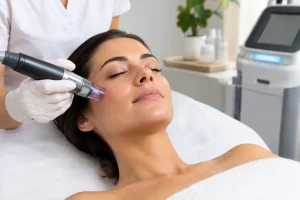
NanoStrokes use a fine machine technique to create individual, hair-like strokes. This can be an excellent option for clients who want the appearance of natural brow hairs in sparse sections, especially when the goal is to blend with existing hair rather than create a makeup-filled brow.
Microfeathering has a similarly refined, airy effect. It can add strategic fullness while preserving the negative space that makes brows look dimensional. Both options are especially appealing when you want to wake up with more complete brows but do not want a visibly powdered finish.
That said, ultra-crisp strokes are not always the best choice for every skin type. Oily skin, very mature skin, or skin with significant texture may heal with softer-looking lines than expected. In those cases, a different approach may provide more consistent long-term results.
Ombré powder brows for soft, reliable definition
Ombré powder brows are often misunderstood as bold or heavily filled. When performed with a light hand and customized color, they can be one of the most natural options available. The effect is a soft, shaded brow that is lighter at the front and more defined toward the arch and tail.
This technique works beautifully for clients who regularly use brow pencil or powder and want to reduce their daily makeup routine. It is also a strong choice for skin that may not retain fine strokes as predictably. The key is not the technique name. It is the artist’s ability to control saturation, placement, and tone.
Many clients benefit from a combination approach, with realistic strokes in areas that need hair-like detail and subtle shading behind them for fullness. The finished brow should not announce the method used. It should simply make your face look more rested, balanced, and put together.
Color Is Becoming Softer and More Strategic
Natural brows are rarely one flat color. They hold subtle depth, with lighter and deeper areas created by hair direction, density, and natural light. Permanent makeup should reflect that complexity rather than rely on a single dark pigment.
Current brow trends favor shades that complement your skin undertone and natural hair color instead of matching hair color exactly. A brow that is too warm can turn noticeably orange over time. One that is too cool or dark may look harsh against the skin. A professional color assessment accounts for your undertones, existing brow hair, and how pigment is likely to heal.
Clients with gray or silver hair often benefit from a soft taupe or neutral brown rather than black. Redheads may need a balanced, muted warmth rather than a bright auburn shade. For brunettes, depth can be added without making the brows nearly black. These small decisions are where a customized result separates itself from a one-size-fits-all service.
What Natural Brows Should Not Do
A natural-looking brow should not overpower the eyes, compete with your skin, or create an expression that feels unlike you. It should also avoid a tail that drops too low, an arch that is too sharp, or a front that appears denser than the rest of the brow.
Symmetry is another area where realistic expectations matter. Brows are sisters, not twins. Facial muscles, bone structure, and natural hair patterns are often slightly different from side to side. Thoughtful mapping can create visual balance, but forcing both brows into exact mirror images can make the overall result look less natural.
It is also wise to be cautious with photos filtered under bright studio lighting. Before-and-after images are helpful, but ask to see healed work when possible. Fresh permanent makeup often appears darker and more defined before it settles. Healing is part of the process, and touch-up appointments allow the final result to be refined after the skin has recovered.
How to Choose a Trend That Will Still Feel Like You
Bring inspiration photos to your consultation, but use them as a starting point rather than a blueprint. Look for images of people with similar skin tone, brow density, face shape, and makeup preferences. Then discuss what you like about each image: more fullness, a straighter shape, a softer front, or less time spent getting ready.
Be honest about your routine, too. If you prefer a polished makeup look every day, a slightly more defined ombré brow may feel perfectly natural to you. If you wear minimal makeup and want brows that disappear into your face, NanoStrokes or Microfeathering may be a better fit. There is no single right level of definition, only the level that supports your confidence.
At Brows by VJ, the goal is never to place a trend on top of your features. It is to create a brow design that works with them, using precise mapping, thoughtful pigment selection, and a technique chosen for your skin and lifestyle.
The best brow trend is the one that lets you look in the mirror and recognize yourself right away – just a little more polished, every day.